Conflict Revolution
Upstream
Upstream is an offering of essays that map the landscape as I see it. Subscribers get full access to my work. If you are already a member, please login below.
If you are not currently a member but would like to join, please click here.
Quiet descends on our smallholding in late June. It is only then I realise what company I keep with the birds who build nests here. We counted 10 different species this year from blackbird to bullfinch, song thrush to wren and their chatter was rumbunctious. The loudest of all was the starling, a bird for whom I have the softest spot (read more here).
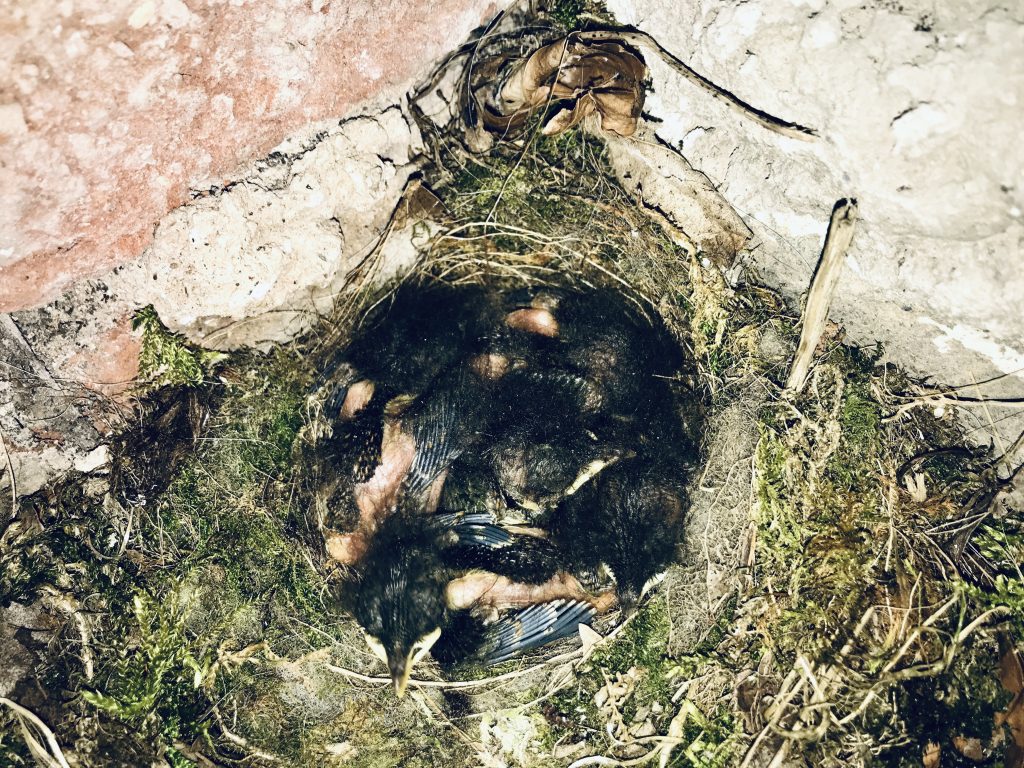
Compared to the birds who go to great lengths to disguise their nests, starlings are impressively overt. They arrived in the spring to scout for sites, a noisy gang in slick suits, scaring birds from the feeder then exchanging banter on the weather vane. They established a colony in the pig killing shed (as the kids like to call it), weaving rough straw nests in the stone walls where the masonry has worn away. By late spring, the love songs rang clear, syncopated codes to attract a mate with bars of local melody thrown in. Our starlings mimic the whistle my husband uses to call our dog, the cry of a buzzard and occasionally the shriek of a fox. It’s more beat than birdsong, more rap group than choir.
The home range
My vegetable garden backs onto the shed where the starling colony reigns. I heard the first cheeps of newly hatched chicks in May. Their hunger built until they clamoured all day to be fed. I watched the parent birds move tirelessly from the home range, where the adult birds forage, to the nest. I remembered well those early, all-consuming days of motherhood. Around the same time, coal tits hatched behind the pear tree, the wrens hatched in the ivy above my greenhouse and a raucous nest of jackdaws began cawing from the roof of my husband’s tool shed.
Every day, I crossed the flight paths of parent birds with beaks full of caterpillars, insects and worms. I endured scolding from the starlings when I got too close to their shed and, if something had to be retrieved from inside the shed, it was a quick in and out to avoid the dive bombers. For almost two weeks, I tiptoed around my pear tree and allowed the weeds to flourish next to the shed and then…silence.
I pay attention to these birds because it is as good a place as any to learn about devotion. Every time I cycle through this season of noise and avian domesticity, it changes me in a small way. This year, it was the silence. Perhaps because I will soon experience it for myself.
We will leave our smallholding at the end of the summer and move to the west of Ireland. The three little birds that I have had in my nest for 11 years will fledge to attend a Sudbury Educational Project, my husband will leave the NHS in search of work in the south, and I will have silence.
School-centric society
A friend once told me that the cells in our bodies regenerate every seven years. The number seven is significant in world religions and philosophical thought, including the work of social reformer, Rudolph Steiner. Whether it bears significance or not, as we reach the seventh year of our journey in home education, there has been a discernible shift in our family. I have been present to it for months, rumbling beneath the surface, vying for my attention. It has asked me to look closely at my children, to acknowledge their changing needs, to be honest about the educational landscape of this country and the limitations that a school-centric society places on our lives. I have looked at myself too: I am creatively depleted; I need a break.
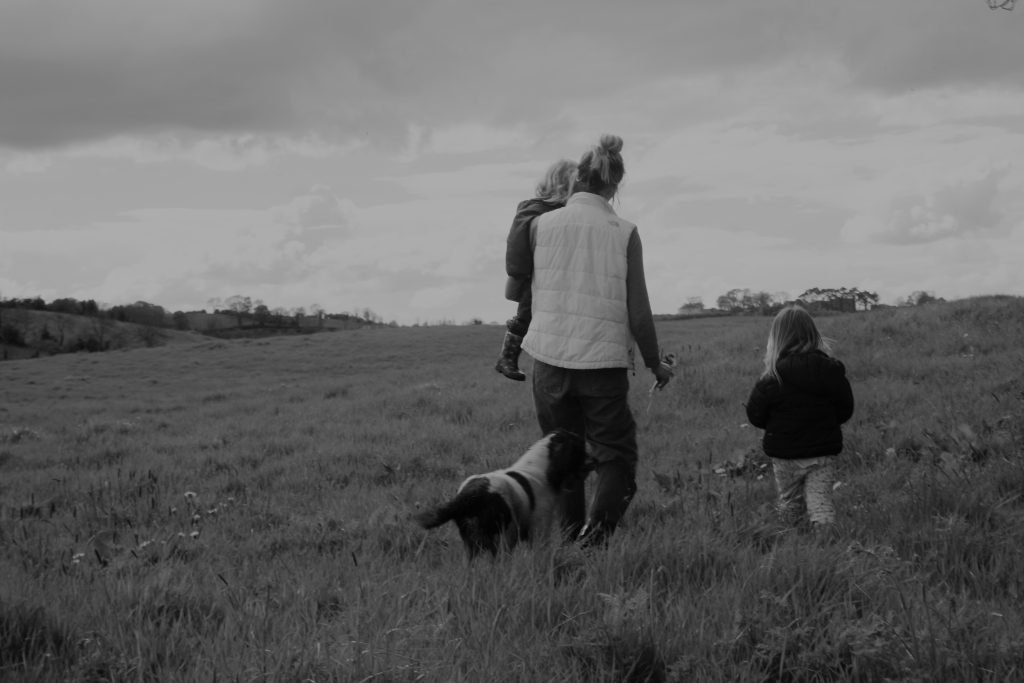
Once, when my children were six, five and two, we decided to do our morning reading in the small, glass porch at the front of our house. I settled down with Charlotte’s Web and a cup of tea and called for my youngest to hurry. He came in and closed the door behind him, just as I shouted for him to leave it ajar. The three of us were locked in. I had no phone, and my husband was not due home until nine o’clock that evening – it was 11 am. The room was approximately 12ft squared and we were trapped until the postman arrived at three o’clock. When the children tell the story, they say I kissed the postman. I will neither confirm nor deny that version of events. In truth, we were absolutely fine. I read to them for hours, they extended their space with the power of their imagination, and we found a packet of hobnobs under the sofa.
Can we trust them?
We have found many creative ways to occupy the spaces in which we have found ourselves over the years. All the children wanted was me, good stories, time with their dad, adventures with friends and freedom in the natural world. We have chased every spark, whim and question and the pursuit of learning has taken us on terrific adventures. None of this, of course, is over, it is just taking a different shape.
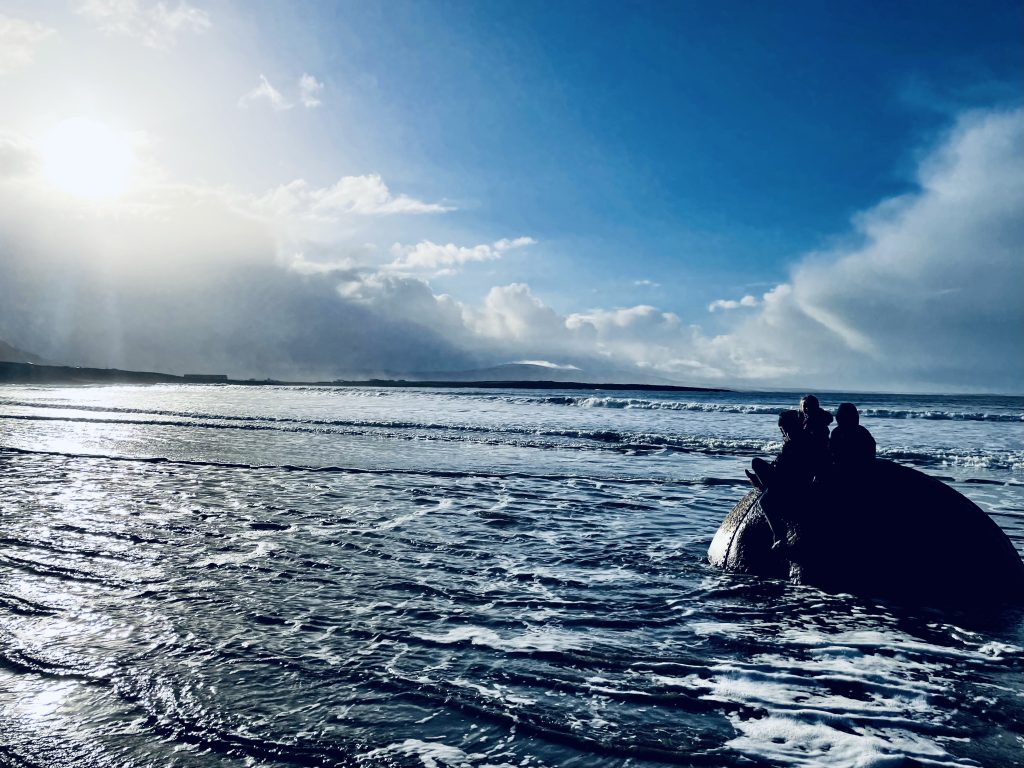
The Sudbury model of education creates an environment in which children are free to learn what they want, when they want and how they want. Coming from a school-fixated society, it is almost impossible to imagine what this looks like and how it might work. Can we really trust children to direct their own learning? I have read extensively about this model of education, and we are very excited to explore these concepts within a flourishing learning community. We are also apprehensive about moving our family to the other side of the island in pursuit of this dream.
I feel like I did seven years ago when we first embarked on our journey into home education. In every conversation people would raise their concerns and ask their questions. I would shrug and say, “I don’t know.” I do not know if my children will thrive in this environment. I do not know how long we will be in the west of Ireland. I do not know how I will adjust to the silence. I do not know, I do not know, I do not know.
I reassure myself that none of us know, not really.
The ripple of revolution
We first visited the Sudbury educational community in January. It was a cold, bright day and we were met by three enthusiastic children. They gave us a comprehensive tour of the campus, told stories and invited us to explore the environment; they were an excellent advertisement for the project. The next time we visited, two staff members held a space for our children to ask all their questions: Is there a school bus? Can I learn acrobatics? What if someone bullies me? To the last question the staff member asked how we deal with infighting in our home. My youngest told him we had a ‘conflict revolution’. I prevented his siblings correcting his ‘revolution’ with resolution and we adopted this phrase.
Revolution (n): to overthrow social order in favour of a new system.
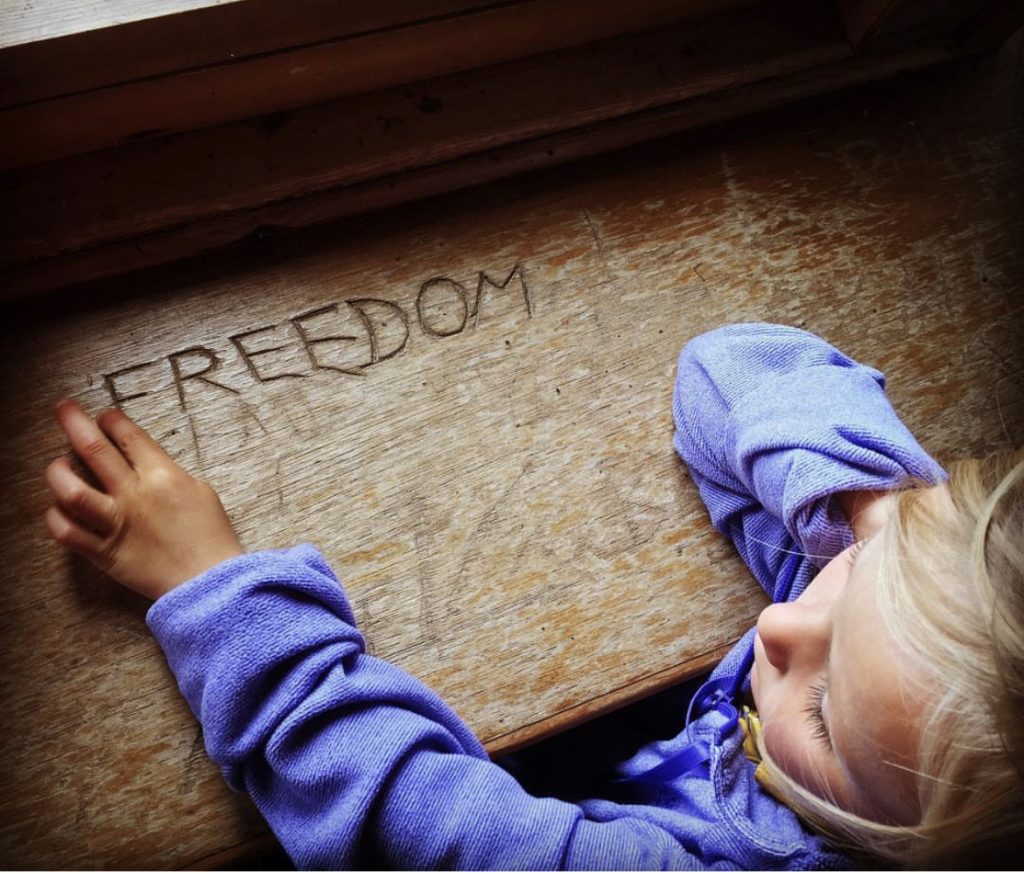
Seven years ago, a dear friend told us to be aware of the ripple effect of revolution. We laughed and told her it was only the school system we wanted to opt out of. She was right, of course. Systematic anything became problematic once we began to prioritise informal, instinctive learning. Even the etymology of these words is challenging. Synonyms for systematic are methodical, orderly, accurate, correct. The antonyms bear such negative connotations: haphazard, hit-or-miss, chaotic, shambolic. In the spaces between these words there is judgement. Just because we do not follow the educational/religious/healthcare/food production system does not mean we have descended into chaos. Conversely, there are many rebels who fight the systems from within and there are more besides who love the order that systems provide. We each have roles to play, and life is terribly interesting when we learn to play them well.
Lost frequencies
In early July the swallows build their nests. These swift little birds take water from our duck pond, mix it with earth and craft sloppy little mud nests in the rafters of my wash shed. They squeak and sing in the evenings, and I watch them feed on the wing, darting like shot arrows above the long grass.
In the wake of so many chicks having fledged I notice other things: the hum of bumblebees on the comfrey; the whisper of a westerly wind through the willow tunnel; frogs in the pond; clouds of hoverflies about the chamomile and the quiet persistent work of a blackbird in the leaves. The world is never silent, not really, and there will be many lost frequencies into which I can tune when my children are away from the house. Characters I have sidelined for years can speak up, plot lines I have ignored will unspool and the voice of my creative revolutionary soul will have its say once again.
Latest Publications
Search Site
related journal entries




People With Whom I Have Worked