The Raspberry Room
Upstream
Upstream is an offering of essays that map the landscape as I see it. Subscribers get full access to my work. If you are already a member, please login below.
If you are not currently a member but would like to join, please click here.
This month, you will find the stories of a few subscribers peppered among the text in italics. Thank you to those who let us peep behind the scenes of their lives.
My son stands beneath my Babyliss hair drier, bracing himself. He tries to catch my eye as I work my way through his curls. I draw it out for as long as I can, allowing his anticipation to build, watching his body bristle and twitch.
Do you remember that feeling, when the responsible adult in your life broke from routine to do something playful or unexpected?
He holds his laughter like a tightly coiled spring, and I give nothing away. The eyes of his toy blue tit bulge as he squeezes it until his knuckles blanch. He is the only one of the three who will let me dry his hair.
I meet his eye in the mirror, and he freezes. Quickly, I pull his pyjamas by the hem and twist the hair dryer in my hand like I’m drawing a pistol at the last minute. His t-shirt balloons, creating a belly full of hot air that escapes through the neck and blasts his fringe. His delight is exquisite. He is both relieved that I have remembered this little game of ours and desperate not to break its spell. I return to drying his hair and he reels himself in. I say, “That’s enough of that, let’s get this hair dried.” He nods, scanning my face for trickery. I want to dunk him beneath the bathwater then dry his hair all night.
Small Stories
This is not a big story; this is one of many small stories, like invisible threads, with which we have stitched together a life. They are the rituals that are hard to put into words because they become so integral to the fabric of our life that we hardly notice them. They are the bread-making, the retrieval of the bin from the end of the driveway, the grass-cutting, the pre-dinner glass of wine, the school run, the dump run, the Sunday paper, the Friday night pizza. They are smaller still: the kiss goodnight, the way my mother rubbed the towel across my cheekbone when she lifted me from the bath or the names by which we are known by loved ones. The smaller they get, the more personal, the more intimate.
My parents are fantastic hosts. At the start of every dinner, someone says grace. I have gone through stages of enjoying and hating this ritual but today, I value the pause before eating.
A moment to stop.
A moment to check in with being.
A moment to practice gratitude.
Sometimes, it is the first time in the day I take a conscious breath. And I think, ‘oh, ah, there I am. Here we are.’
Grace in my house, looks like a Tibetan singing bowl on a small orange cushion with a wooden striker. My two-year-old picks up the wooden part and strikes the bowl with great enthusiasm. The bowl resounds and we all take a big, deep breath.
And two.
And three.
Ah so.
It brings us space.
It reminds us how beautiful silence is. It tunes us in with our breath and our bodies. Before we tune in with each other and the food we are about to enjoy. – Cameron Stewart
An Invitation
I inherited rituals; we all did. These conventions and habits came from my family and the culture in which I was raised. It is necessary and important work to see which of these threads can be woven into the tapestry of my own life and which need to be unpicked and respectfully set aside.

From the day I got married, almost 15 years ago, there has been no consistent weekly rhythm to our life. Shift work turns a Monday night into a Friday night, obliterates the weekend and makes it quite impossible to keep track of which day is which. Removing church attendance and commitment to a school calendar left us truly adrift in the week. At first this was disorientating, like stepping out into a vast landscape with no sense of our bearings. Then, we looked around and saw it for what it was: an invitation to map our days. There was post-call porridge, car picnics in the ambulance bay and a short stint of two am tea parties during the Accident and Emergency rotation.
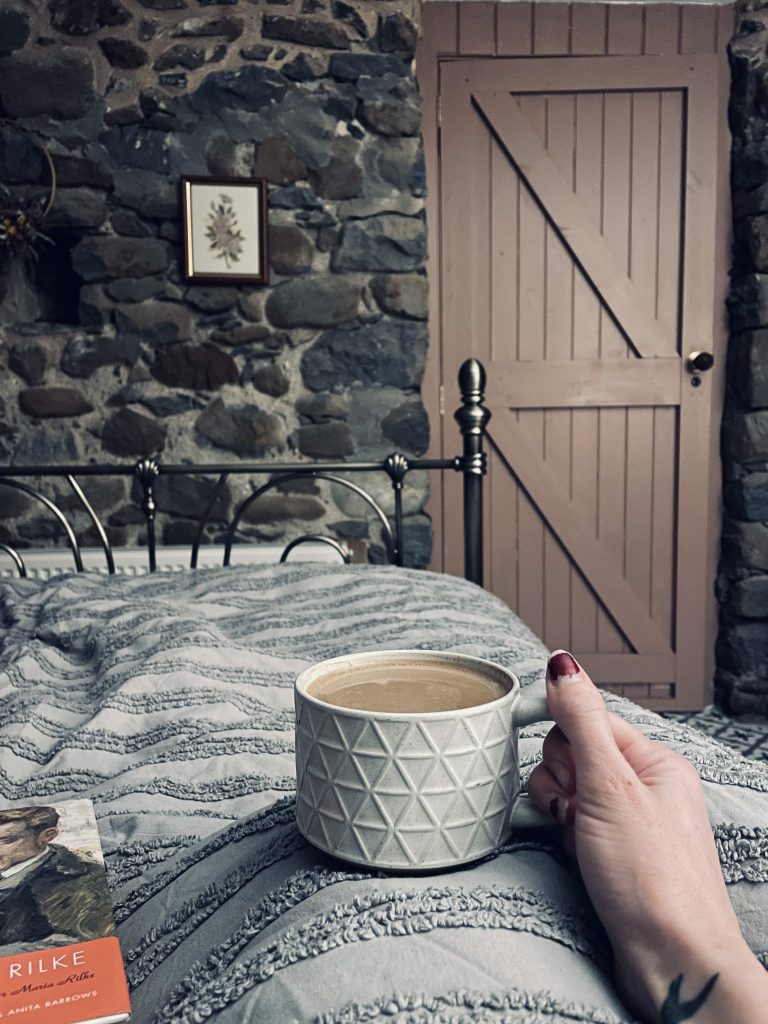
When we were five-years married, we struck a deal. He would do morning coffee; I would put the kids to bed. He traded half an hour in the evening for the same time putting hot water in the cafetiere; he has made our morning libation ever since. Coffee in bed is one of the most sacred rituals we uphold. It did not begin as an intentional act to prioritise our marriage but over the years it has become that.
At 7:20, the kettle flicks on for the second time that morning – double cup time, ready to share my tea-making prowess with my slumbering husband. A dash of milk, a spoonful of sugar, and a quick, skilful stir before climbing the stairs, balancing an ironed shirt in one hand and a mug in the other. Silently, I slip into the room, placing the steaming cup down as he stirs. "Good morning," I whisper, opening the blind to embrace the day. Not a 1950s housewife (wink), but driven by my early riser's spirit, superior ironing skills, and knack for making great tea; a ritual fuelled by love. – Leah Boden
Redolent of Cauliflower Cheese

Our lack of routine also meant losing one of the most nostalgic, delicious parts of my childhood: Sunday dinner. It wasn’t just the food, although the food was always wonderful, it was the ceremony my parents enacted week on week, year on year. It was the carrot batons and peeled potatoes soaking in pots of water; the raw roast coming to room temperature; the poetry of oven timings recited on the return from church; the pudding prep, the heated plates and calls for “someone, anyone” to set the table. Best of all, was the execution of six servings of perfectly cooked accompaniments on the island while my father drove the electric carving knife through the roast. The only time I knew him to raise his voice was to be heard above the shearing, impressing upon my mother the need for plates upon which he could put meat. It was tense, steamy, and redolent of cauliflower cheese. My mother was tight lipped until every plate had been loaded and sent to the table. Then, she would hover, anticipating requests for more gravy, butter, an extra potato. My father would tell her to take off her apron and she would finally join us at the table.
With no Sunday in my week, this is a ritual confined to memory. I often return to it for a nibble of baked potatoes that I can never, no matter how I treat them, bake with so crispy a skin as my mother did.
Granny was a feeder.
The thought warms me as I prepare my chicken for its two-day salt bath. This roast chicken that has become a family ritual. This roast chicken that took me six months to perfect, is more than just roast chicken.
Granny was tired.
I know this because to know my Granny was to know her endless work amongst the marginalised and forgotten. Wife, mother, social worker and celebrated civil rights activist, Granny was best friends with tired.
I too am tired. As I preheat the ovens, peel the potatoes, set the table, and bring the water to boil, I wonder why I go to all this trouble for my husband and three feral children.
Granny took the long way around.
Her kitchen rarely lay dormant. There was always a carrot being chopped. A pot being stirred. A potato being peeled. Chop, stir, peel. Every single day.
As I lay out my vegetable trivet of carrots, onions, peppers and mushrooms I feel close to her. Close to her love, her exhaustion, her sacrifice.
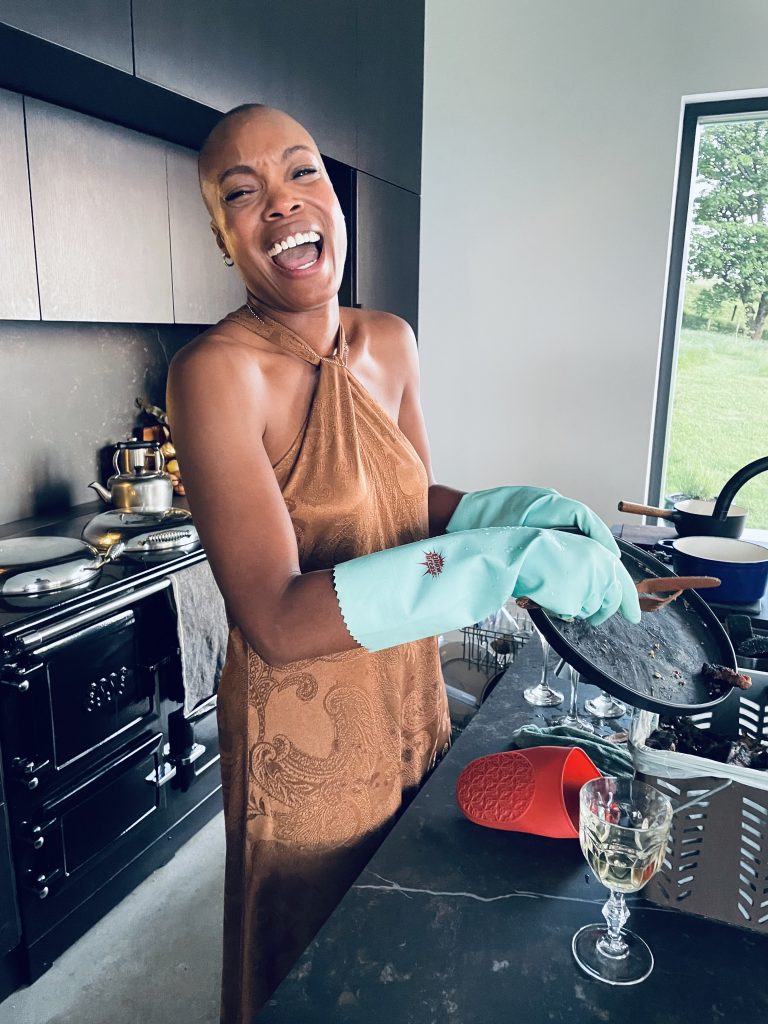
There’s a kind of love that can only be communicated through feeding: the planning, preparation and repetition of a meal that costs something beyond just money. A meal that becomes a ritual, a rhythm, like washing one’s hands or hugging goodbye.
Granny is gone.
But her ritual of everyday extravagance has never left me. So here I am, on this ordinary Sunday, once again engaging in this ritual around my dining table to a chorus us of “Mmmmms…” and “best gravy ever, Mama”. As soured attitudes turn to overwhelming gratitude, I can’t help but think about Granny. – Dana Masters
The Little Hooks
In lieu of church, school and the structure of a basic working week, our traditions have developed slowly, like shy friends we have drawn out of shells. If everything really is sacred (and I believe this with all my heart), these rituals become little hooks upon which we hang the things that spilled from containers we no longer use.
Our daily table time, for example, evolved from a piece of toast and a song about a red morning tractor to the elaborate feast it is today full of poetry, musical renditions, storytelling, history books and beautiful conversation. It is one of the very few home education rituals that has stayed the course and the thing our children love most.
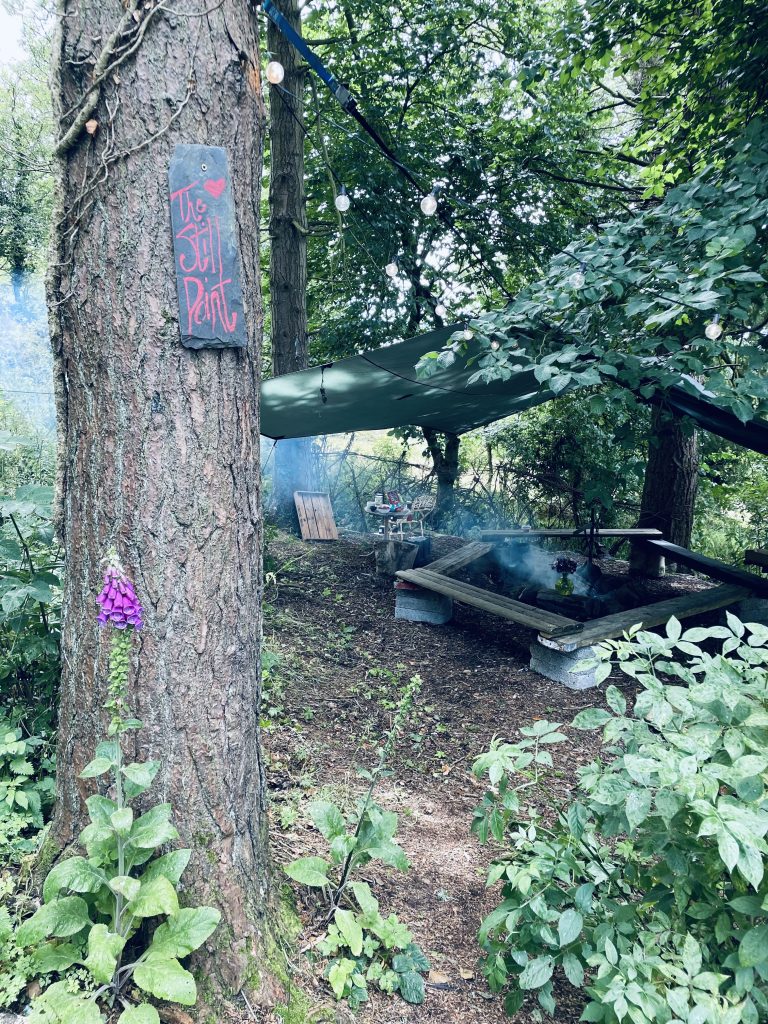
Our monthly firepit community has provided a quiet, creative space to recover from a lifetime in church. Here we discovered there are many ways to gather and pass the peace.
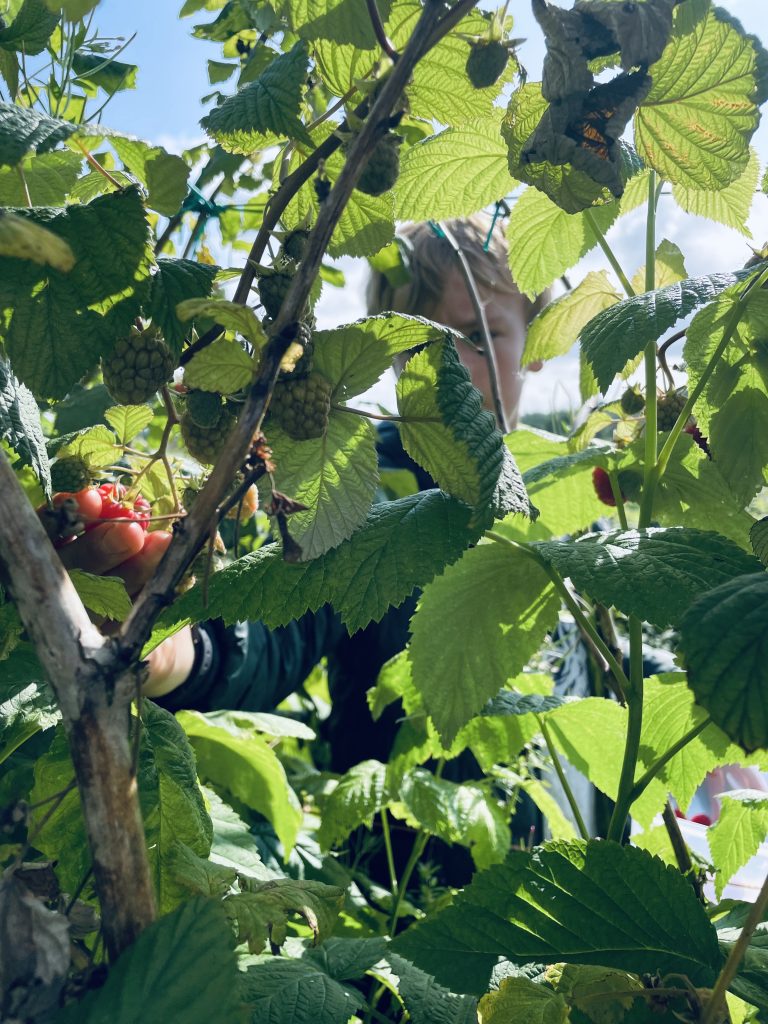
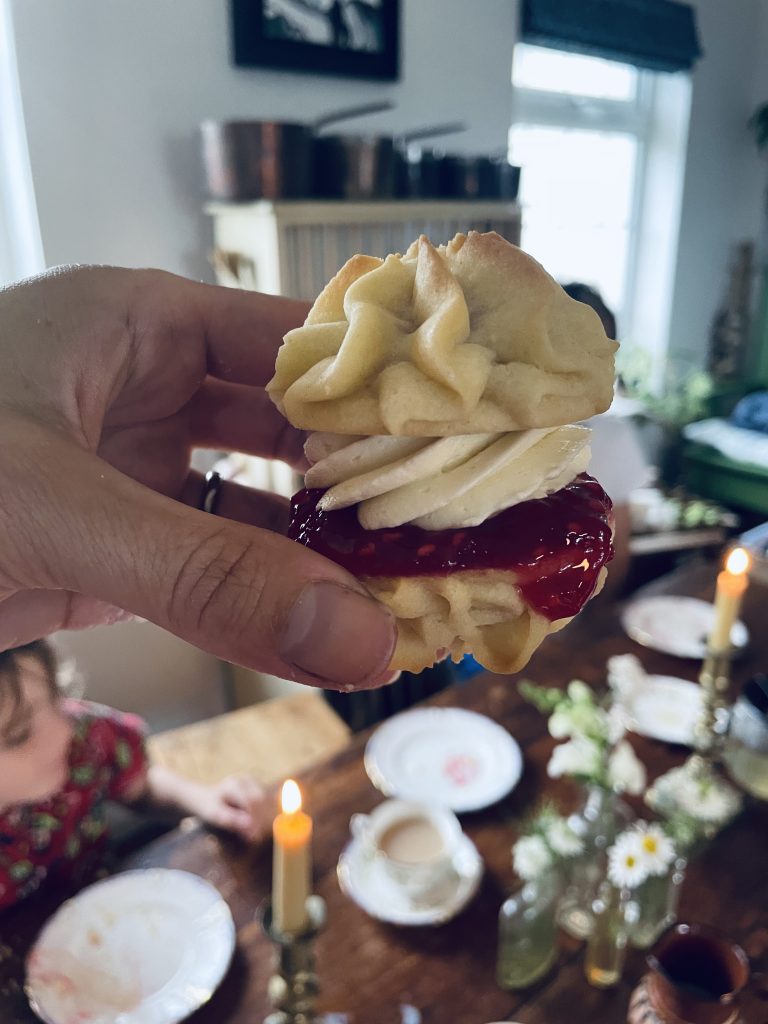
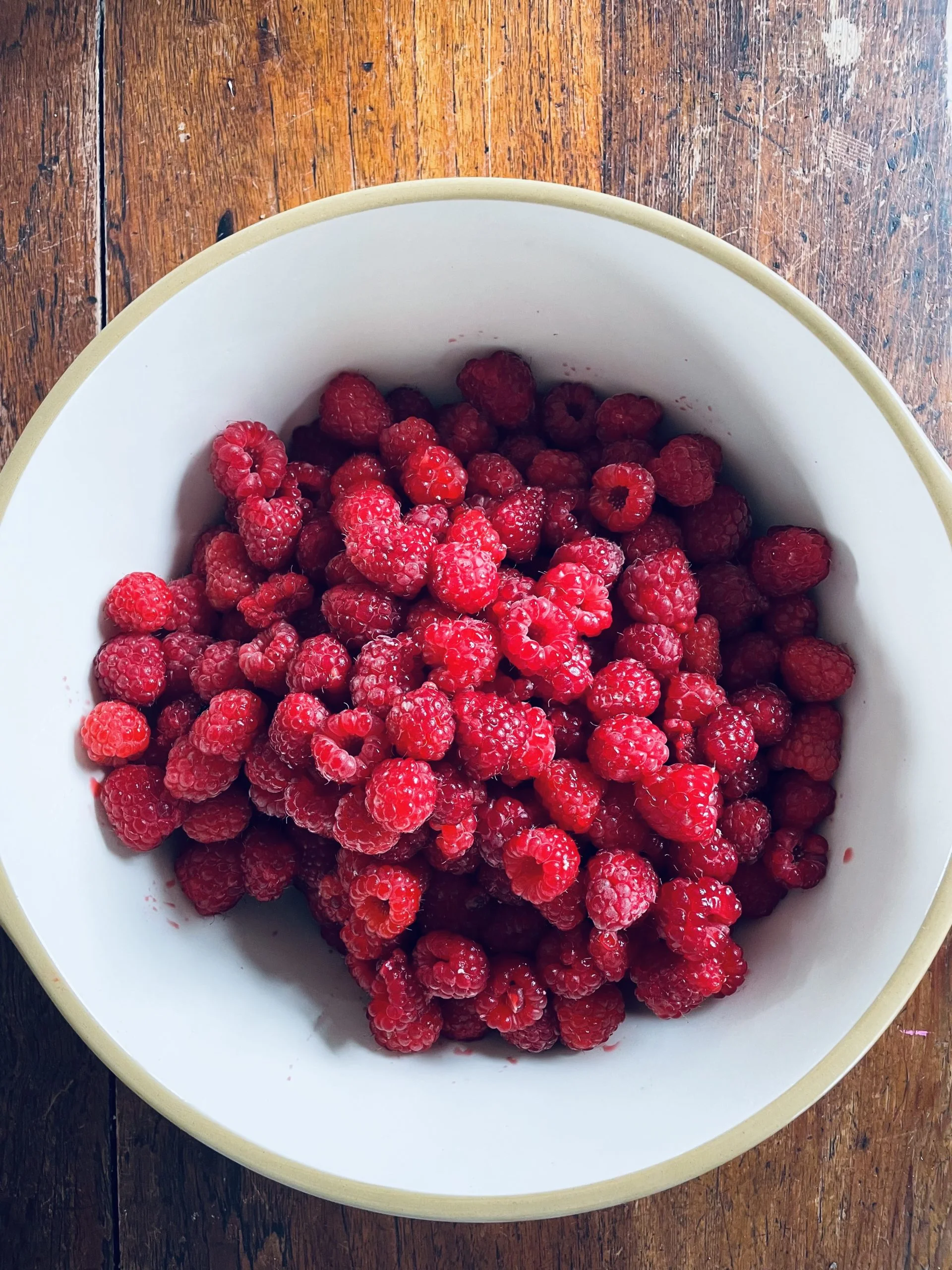
There are seasonal rituals too that we anticipate with every turn of the year’s wheel. In late July, we pick raspberries from Finlay’s Place in Killinchy and enact one of our favourite rituals: the melting moment. In celebration of the humble raspberry that shines so briefly in our food calendar, we spend an afternoon making jam, butter biscuits and thick vanilla pastry cream. Then, we sandwich the delicate biscuits with the jam and cream and devour the melting moments in one sitting.
My office sits at the base of our home's staircase. Though I can't see it from my desk, I've grown accustomed to the distinct sounds of each person sleepily descending. Their footfalls are so familiar that I can differentiate each family member based on their unique stair descent pattern. It's become a morning test for me – will I get it right? "Good morning, Micah!" I proudly announce to my teenage son. As he pops his head around the door, my enthusiastic "hello" bursts forth not only because I adore his face, but because I've triumphed once again in my little game. – Leah Boden
Feeding Time at the Zoo
This recognition of ritual is a way of affirming life. It is a generous lens through which we can view our days and name the commonplace things holy. It is an invitation to scour the empty corners of our weeks, months and seasons to find hooks for the things we discover there. With a little bit of intentionality, we can elevate the most basic practices.
On our recent trip to Spain, we faltered at the first hurdle. It was dinnertime on the ferry and when we sat down to eat, it felt like navigating feeding time at a zoo. The small animals barked and struggled to control their bodies. There was a general feeling that the food might disappear at any moment, so they needed to pounce on it in great competition with one another. As soon as appetites were satiated, the small animals declared utter boredom and begged to be released. My husband and I decided something needed to be done. So began our mealtime ritual. We invited everyone to come to the table with either a story, a piece of information we did not know about them or a make-believe tale. It took several days to gain momentum but before long, we were lingering around the table. One evening, our youngest (6) said he had something to share.
“This morning, before you woke up, a lady in a golf cart gave me a lift to the toilet block.”
We assumed this fell in the category of a make-believe tale but in fact, our quiet little man had hitched a ride in the campsite at dawn. He treasured the telling of that story all day.
Ancient Rites
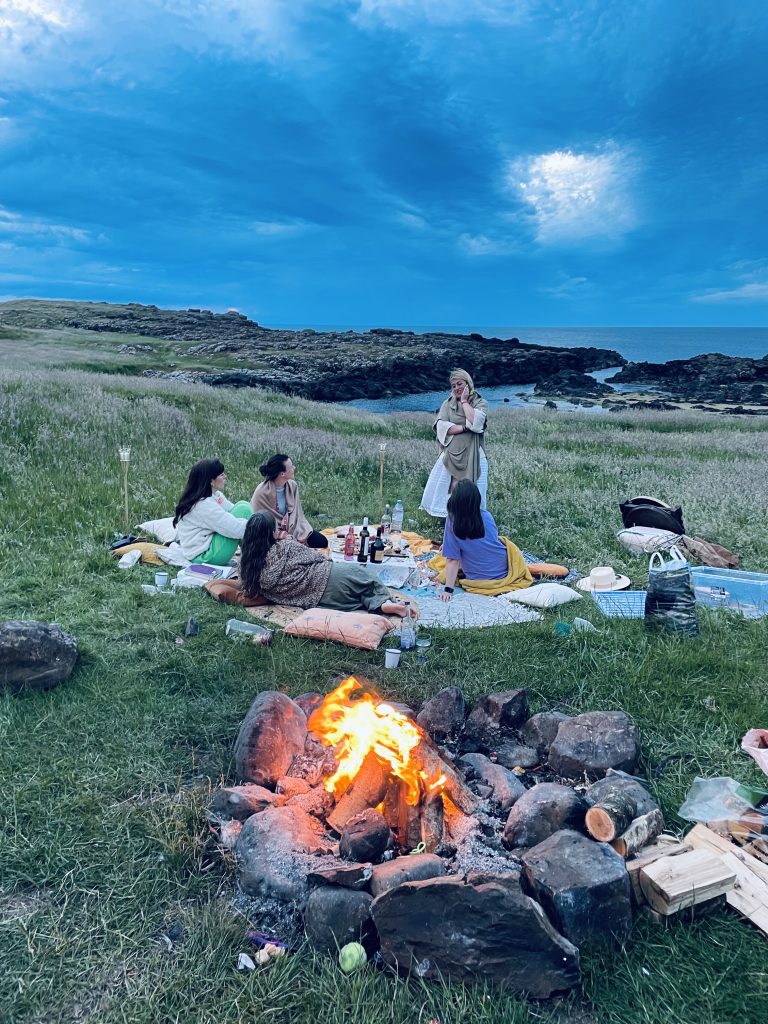
If we reach into our history, there is a deep well of ritual and celebration from which we can draw. These ancient practices are tethered to the land, the seasons and the movement of the sun and moon. From this Celtic almanac, I have discovered rhythms that make sense to me. More hooks, old, weathered hooks fashioned by smiths, rusted with age but made from sturdy stuff. These hooks allow me to divvy the year into six-week blocks bookended by ritual. This year, I have marked these celebrations with a small group of women (read more here). We have moved from death and darkness to bright light and blossoming. Our most recent gathering marked Lughnasa, a joyful dance of gratitude for the harvest.
These rituals, the small stories of a life, the spaces we choose to bless, allow us to be fully present to the life we are living. John O’Donohue, in his book Benedictus, writes about the need for blessing to allow us to navigate thresholds in our lives - those times of flux that we choose and those endings or new beginnings that are thrust upon us. His words have accompanied me for years.
‘Your outlook actually and concretely affects what goes on. When you give in to helplessness, you collude with despair and add to it. When you take back your power and choose to see the possibilities for healing and transformation, your creativity awakens and flows to become an active force of renewal and encouragement in the world.’ John O’Donohue
Our outlook on blow drying our children’s hair matters, or rather, we can choose to make it matter.
These are my small stories. They are particular to my family, my community and the path we are charting across this vast and wonderful landscape, this splash we are making Upstream. This is how we choose to take back our power.
What are your small stories? What are the rituals you did not think to give that title? I have told you some of mine; tell me yours.
In the meantime, you are very welcome to borrow this one. Here is my inherited recipe for raspberry jam and the Melting Moments that take time to make but might just change your life.
Raspberry Jam
1kg raspberries (as fresh as possible)
800g granulated sugar
8 tblsp fresh lemon juice
Put half the fruit in a large pan and mash with a fork. Add the remaining fruit, sugar and lemon juice.
Stir over a low heat to dissolve the sugar. Increase the heat to a roiling boil and boil for five – eight minutes. Remove from the heat and stir. Cool for five minutes then pour into sterilised jars.
Melting Moments
250g butter, softened
60g icing sugar, sifted
½ tsp vanilla extract
250g plain flour
60g corn flour
For the Filling:
125ml milk
2 tblsp plain flour
125g caster sugar
125g butter
1/2tsp vanilla extract
2 tblsp raspberry jam
2 baking sheets, lined with baking paper
Piping bag fitted with a star nozzle
Preheat oven to 180 degrees.
Beat the butter and icing sugar until very pale and creamy (about 10 minutes). Add the vanilla extract and beat briefly. Sieve the flour and cornflour into the bowl and mix until smooth.
Spoon the mixture into the piping bag and pipe 32 swirls onto the baking paper. Chill in the freezer for 15 minutes.
Bake the chilled biscuits for 12 minutes until golden. Leave to cool on the baking sheet for several minutes then transfer to a wire rack to cool completely.
For the Filling: heat the milk and flour in a small pan, whisking constantly until it thickens. Cook on a low heat for a couple of minutes to cook out the taste of the flour. Pour mixture onto a plate to cool and cover with clingfilm to prevent it forming a skin.
Beat the butter and sugar until pale and fluffy (about 10 minutes). Add the thickened milk and vanilla and beat until pale and creamy. If it is very soft, chill until firm enough to pipe.
To assemble, spread a little jam on the biscuits, pipe a swirl of cream and sandwich pairs together.
Finally, make a pot of tea, lay a beautiful table, and read the following poem by Karin Gottshall (this stage is not essential but will definitely add to the experience!)
The Raspberry Room
BY KARIN GOTTSHALL
It was solid hedge, loops of bramble and thorny
as it had to be with its berries thick as bumblebees.
It drew blood just to get there, but I was queen
of that place, at ten, though the berries shook like fists
in the wind, daring anyone to come in. I was trying
so hard to love this world—real rooms too big and full
of worry to comfortably inhabit—but believing I was born
to live in that cloistered green bower: the raspberry patch
in the back acre of my grandparents’ orchard. I was cross-
stitched and beaded by its fat, dollmaker’s needles. The effort
of sliding under the heavy, spiked tangles that tore
my clothes and smeared me with juice was rewarded
with space, wholly mine, a kind of room out of
the crush of the bushes with a canopy of raspberry
dagger-leaves and a syrup of sun and birdsong.
Hours would pass in the loud buzz of it, blood
made it mine—the adventure of that red sting singing
down my calves, the place the scratches brought me to:
just space enough for a girl to lie down.
Latest Publications
Search Site
related journal entries




People With Whom I Have Worked